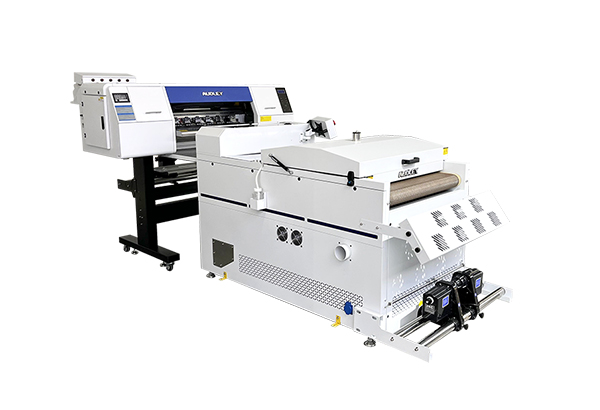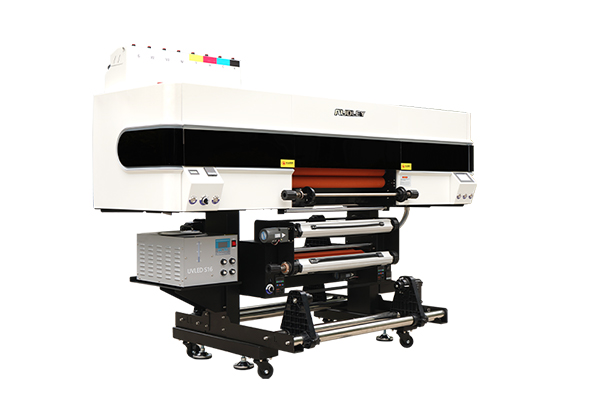
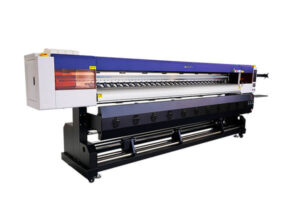
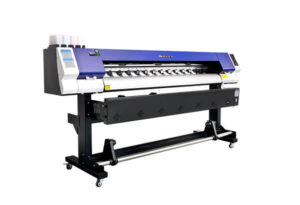
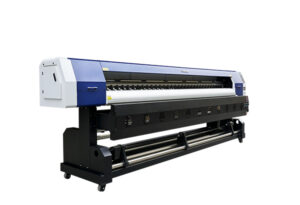
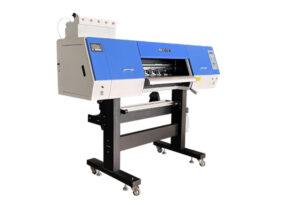
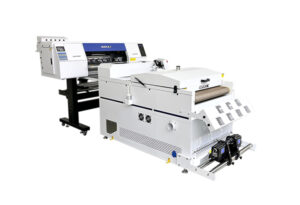
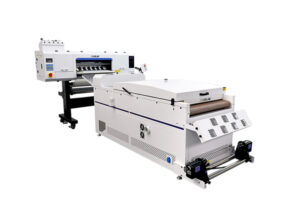
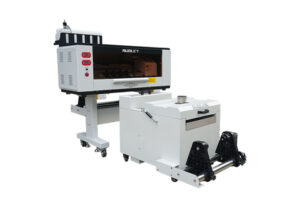
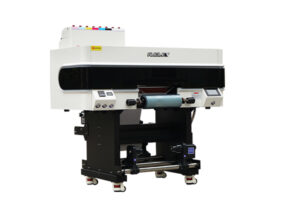
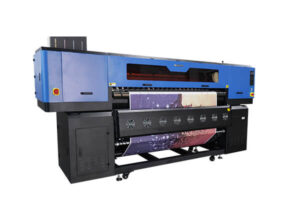
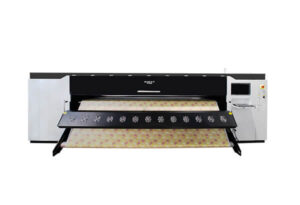
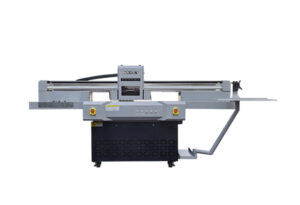
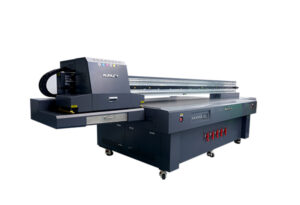
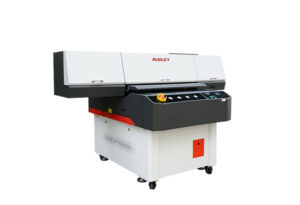
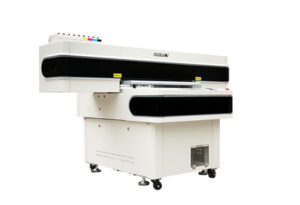
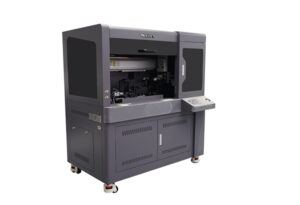
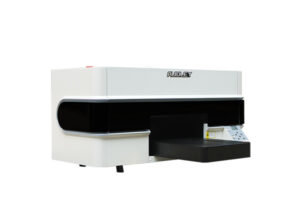





A UV crystal label printer is designed for more than simple sticker production. For customers who need raised logos, glossy brand labels, decorative decals, and embroidery-style effects, the key is not only the printer itself, but also the complete control of ink layout, varnish thickness, curing power, printing accuracy, and application workflow.
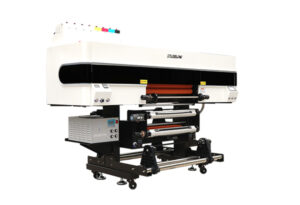
The 8074-3 UV DTF printer is built for this type of production. With a 600 mm printing width, three 3200-U1 printheads, and a color plus double-varnish printing solution, it provides a practical set up for producing premium crystal labels with a smooth doming effect.
1.Why Ink Layout Matters in Crystal Label Printing
In UV crystal label production, ink layout directly affects the final texture. A common recommended layout is C V V, which means one color channel and two varnish channels. The color layer prints the design, while the two varnish channels build height, gloss, and surface smoothness.
Compared with single-varnish printing, double-varnish stacking creates a fuller raised surface. This is especially important for small logos, badges, product labels, and embroidery-style patterns, where the customer expects a clear outline and a premium tactile feel.

2.Recommended Printing
For high-quality crystal label output, 720 × 1800 DPI with 6PASS printing is a balanced setting. It offers enough resolution for fine details while keeping production efficiency at a practical level
3. Feathering Settings for Smoother Edges
Crystal labels often include logos, letters, icons, and small decorative elements. If the edge transition is not smooth, the final product may look rough, especially under strong light.
A feathering setting of 40%–60% is recommended to reduce visible grain on the printed edge. This setting helps the ink transition more naturally and improves the overall appearance of the label. For customers producing brand logos or high-end packaging labels, this small parameter can make a noticeable difference.
4.UV Curing Control for Gloss and Stability
Curing power is one of the most important factors in UV varnish printing. If the color layer is not cured enough, adhesion may be affected. If the varnish is over-cured, the surface gloss may be reduced.
The 8074-3 UV DTF printer uses a combination of 3515 small lamps and 10015 large lamps. The 3515 lamps are mainly used for curing color ink, and the recommended power range is 30%–40%. The 10015 lamps are mainly used for curing varnish, and the recommended power range is 10%–15%.
This separate curing strategy helps the color layer stay stable while allowing the varnish layer to remain clear, glossy, and full. For doming labels, the goal is not only fast drying, but also a smooth and transparent surface.
5. Hot Transfer Workflow for Flexible Materials
The hot transfer process is mainly used for white flexible materials such as cotton T-shirts, canvas shoes, baseball caps, and garment accessories. The basic workflow includes printing, B-film laminating, A-film peeling, heated pressing, film removal, and final curing.
Before operation, the machine roller should be preheated to around 50℃. During pressing, the heating plate can be set to around 110℃, with insulation cotton used to distribute pressure evenly. For the final heat press, the recommended temperature is 130–150℃ for 10–15 seconds.
After pressing, the material should be fully cooled before use or washing. This step is important for improving adhesion and reducing the risk of edge lifting.
6. Cold Application Workflow for Hard Surfaces
Cold application is better suited for white rigid materials such as acrylic, glass, packaging boxes, signage, and hard-surface gifts. The process is simpler: print the design, cut the shape, remove the backing film, and apply the label directly.
No roller heating is required, which saves preparation time. However, the design should avoid overly hollow structures whenever possible. For better cutting accuracy, the cutting path can be expanded by 1–2 px. For small labels, laser cutting is recommended to reduce burrs and edge lifting.
7. Production Environment and Stability
A stable working environment helps improve print consistency. The recommended temperature range is 18℃–30℃, and the relative humidity should stay between 40% and 60%. These conditions help reduce ink instability, static issues, and film handling problems.
For continuous production, features such as white ink circulation, automatic stirring, stable film feeding, and intelligent warning systems can reduce unexpected downtime and improve daily output reliability.
Conclusion
A UV crystal label printer is a complete production solution for high-gloss doming labels, not just a printing device. controlled UV curing, and the right hot or cold application process, users can produce crystal labels with stronger gloss, better thickness, and more stable adhesion.
For businesses producing brand logos, packaging labels, garment accessories, and decorative stickers, the 8074-3 UV DTF printer provides a practical technical path for premium UV crystal label production.