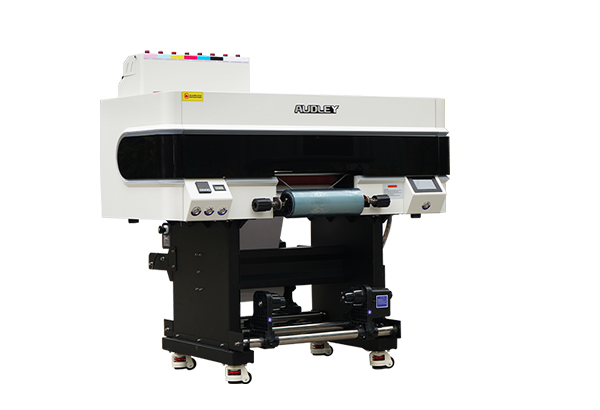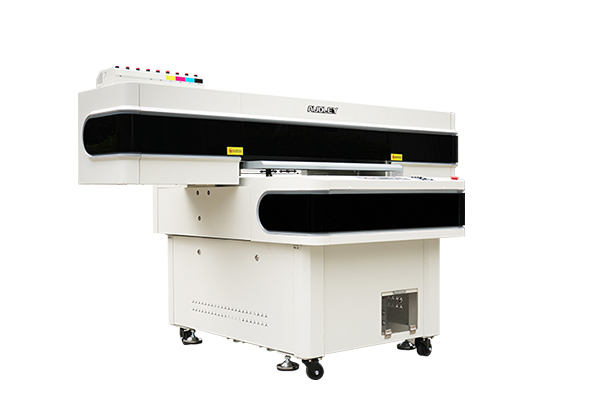



Personalized bottles, tumblers and cylindrical packaging are no longer limited to large-volume promotional orders. Cosmetic companies, gift suppliers, drinkware brands and packaging manufacturers increasingly need shorter production runs, faster artwork changes and more varied product designs.
Traditional screen printing and pad printing remain practical for stable, high-volume jobs. However, they usually require screens, plates, color separation and additional setup work. These requirements can make small orders and frequently changing designs less efficient.
An A3 UV cylindrical printer offers another production route. It prints digital artwork directly onto the surface of a cylindrical object and cures the UV ink during the printing process. This allows a business to produce full-color graphics, white underbase layers and varnish effects without preparing a separate printing plate for every design.

1. A Purpose-Built Solution for Cylindrical Products
A standard UV flatbed printer is mainly designed for flat materials. Although some flatbed machines can use a rotary attachment, the production process may involve additional installation, platform adjustment and manual positioning.
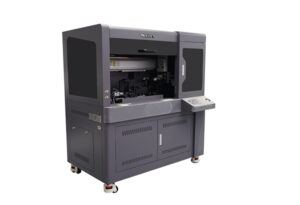
The AUDLEY A3 UV is developed specifically for cylindrical and lightly tapered products. Its rotary structure holds and rotates the object while the printhead applies the artwork around the surface.
The machine supports a printable product diameter of 45 to 100 mm and a printable length of 80 to 280 mm. This range covers many common products, including insulated tumblers, sports bottles, cosmetic containers, metal bottles and selected glass packaging.
Because the equipment is designed around cylindrical printing, the operator can focus on product positioning, artwork preparation and print quality rather than repeatedly converting a flatbed platform.
2. Laser Profiling Improves Product Setup
One of the more practical features of the machine is its laser profiling system. A Japanese OPTEX sensor scans the product shape and helps create a model of the printable surface.
This function is valuable because cylindrical objects are not always perfectly uniform. Bottle shoulders, curved sections and small changes in diameter can affect the distance between the printhead and the product.
Laser profiling helps the operator understand the object shape before printing. It can reduce repeated manual measurement and provide a more reliable reference for artwork placement.
The system is particularly useful when a print shop handles multiple product styles during the same working day. Instead of relying only on visual positioning, the operator can use scanned product information to prepare a more controlled printing setup.
3. Precise 360-Degree Rotary Printing
Full-wrap printing requires more than simply rotating a bottle. The object must rotate smoothly while remaining aligned with the printhead. Any unstable movement can create visible registration errors, uneven lines or an obvious seam where the artwork meets.
The A3 UV cylindrical printer uses intelligent servo control, a Taiwan HIWIN ball screw and high-speed silent linear guides. These components support controlled movement during the printing process.
Its 360-degree rotary system can produce continuous graphics around cylindrical surfaces. This makes it suitable for panoramic designs, repeating patterns, decorative textures and packaging artwork that extends around the product.
The machine can also handle lightly tapered objects with a maximum taper of up to 5 degrees. Products with more complex shapes should be tested before production because fixture selection, surface variation and artwork layout can all influence the final result.
4. CMYK, White Ink and Varnish in One Workflow
The printer uses a CMYK+White+Varnish ink configuration. Each layer serves a different production purpose.
CMYK produces full-color images, gradients, decorative artwork and detailed graphics. White ink can be printed beneath the color layer when working with transparent, metallic, dark or colored products. Without a white underbase, colors may appear less vivid because the original surface remains visible through the ink.
Varnish adds another level of finishing. It can create spot gloss, highlighted details or textured visual effects. For example, a cosmetic container may use varnish to emphasize selected lines, while a promotional tumbler may use a glossy pattern to create contrast against a matte background.
Combining these layers digitally allows the operator to create different effects without moving the product between several traditional printing processes.
5. Printing Range and Production Performance
The machine offers two listed print resolutions:
- 720 × 1200 DPI
- 720 × 1800 DPI
The appropriate mode depends on the artwork, required detail and production target. A design with small text and fine lines may need a higher-resolution setting, while a larger graphic with broad color areas may use a faster production mode.
The listed printing time is approximately 30 seconds to 3 minutes per item. This figure should be treated as a production range rather than a fixed speed.
Actual output time depends on:
- Product diameter and printable length;
- Artwork coverage;
- Selected print resolution;
- Number of white ink layers;
- Varnish coverage;
- Required surface effect;
- Unidirectional or bidirectional printing settings.
For commercial planning, buyers should test their own product and artwork instead of calculating output only from the fastest published time.
6. Simplified Daily Operation and Ink Management
The A3 UV is equipped with a seven-inch Hansen touchscreen, allowing operators to manage key machine functions through a clear control interface.
Its ink supply system includes 500 ml UV ink bottles, a low-ink alarm and intelligent white ink stirring. White ink contains pigments that can settle during extended periods of inactivity, so regular circulation or stirring is important for maintaining consistent ink delivery.
The lifting capping station helps seal and moisturize the printhead when the machine is not printing. It can also be manually reset after a power interruption, providing an additional maintenance option.
A segmented water-cooled UV curing lamp cures the ink during printing. Physical light-shielding measures help limit unwanted UV light scatter around the printhead area.
These functions do not remove the need for routine maintenance, but they make daily operation more manageable for businesses that handle frequent short orders.
7. Applications Across Multiple Industries
An A3 UV cylindrical printer can support more than drinkware customization. Its application range includes products made from selected metal, glass, ceramic, plastic and wood surfaces.
Common application areas include:
Drinkware: insulated tumblers, sports bottles, reusable water bottles and travel cups.
Cosmetic packaging: skincare bottles, fragrance containers, lotion bottles and beauty product packaging.
Promotional products: corporate gifts, event merchandise, souvenirs and personalized products.
Glass and ceramic products: decorative bottles, ceramic cups and selected household containers.
Industrial containers: metal cans, plastic tubes and cylindrical component housings.
The equipment can also support selected spherical products when a customized fixture is developed. However, spherical printing should not be considered a standard configuration because the printable area and fixture structure must be evaluated separately.
Material adhesion also varies. Glass, metal and some plastics may require cleaning, coating, primer or flame treatment. Sample testing remains essential before commercial production.
8. What Buyers Should Evaluate Before Investing
The right cylindrical printer should be selected according to actual products and order requirements rather than machine specifications alone.
Before purchasing, buyers should provide the supplier with:
- Product material;
- Body diameter;
- Printable length;
- Bottle-opening size;
- Product taper;
- Daily production quantity;
- Artwork coverage;
- Required color, white and varnish layers.
A sample test should confirm adhesion, color performance, registration accuracy and surface durability. Buyers should also evaluate fixture changeover, printhead maintenance, RIP software operation and technical support.
With machine dimensions of approximately 900 × 587 × 630 mm, the AUDLEY A3 UV has a relatively compact footprint for a dedicated cylindrical system. Its net weight is approximately 95 kg, providing a stable structure while remaining suitable for sample rooms, customization shops and flexible production areas.
For businesses producing varied bottle and tumbler designs, the value of the machine lies in its ability to move efficiently between products and artwork. The combination of laser profiling, rotary control and multilayer UV printing can turn short-run cylindrical customization into a more structured digital workflow.
Conclusion
The A3 UV cylindrical printer is designed for companies that need flexible, direct printing on bottles, tumblers and lightly tapered products. It combines a practical product-size range, laser-assisted profiling, precise 360-degree rotation and CMYK, white and varnish printing.
It is not intended to replace every traditional cylindrical printing method. For long, repetitive production runs, conventional printing may still be economical. For personalized products, samples, regional packaging and frequently changing short orders, however, digital UV printing provides a faster and more adaptable production approach.